

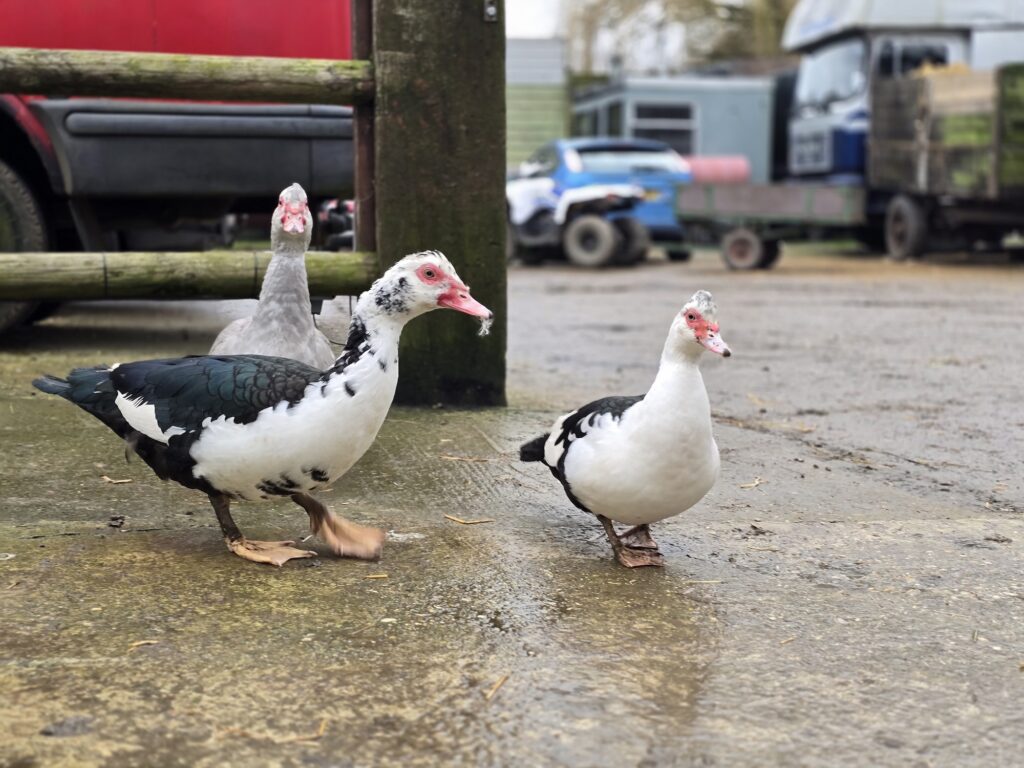
Muscovy Ducks at Our Animal Sanctuary
The Muscovy duck is a distinctive and fascinating breed of duck, easily recognised by its unique appearance and calm nature. Unlike most domestic ducks, Muscovies are not derived from mallards and instead originate from Central and South America.
They are known for their quiet behaviour, unusual facial features, and strong personalities. Because of this, Muscovy ducks often capture the attention of visitors who may be encountering them for the first time.
If you’d like to learn more about our sanctuary and the animals we care for, you can visit our About Us page.
Muscovy ducks are larger and heavier than many other duck breeds. They have broad bodies, strong legs, and wide wings. One of their most noticeable features is the red, bumpy skin around the face and beak, known as caruncles.
Unlike most ducks, Muscovies do not quack in the traditional sense. Instead, they communicate through soft hissing sounds, grunts, and body language.
Muscovy ducks come in a wide variety of colours, including black, white, chocolate, blue, and mixed patterns. Males, known as drakes, are usually much larger than females and develop more pronounced facial caruncles.
Despite their sometimes fierce appearance, Muscovies are often calm, gentle birds when properly cared for.
Muscovy ducks are known for their quiet and independent nature. They are less noisy than many other duck breeds, which makes them particularly appealing in sanctuary and rural settings.
They are also strong flyers compared to other domestic ducks, especially when young. For this reason, secure and suitable environments are important.
Muscovy ducks are omnivorous. Their diet includes insects, grass, seeds, vegetation, and suitable poultry feed. They are excellent foragers and spend much of their time searching for food.
Access to clean water is essential, not only for drinking but also for maintaining healthy feathers and skin.
Muscovies adapt well to a range of environments, provided they have shelter from extreme weather and predators. They benefit from dry resting areas, access to open space, and opportunities to forage naturally.
Although they enjoy water, Muscovy ducks do not require large ponds like some other duck breeds. Shallow water for bathing is often sufficient.
Our Muscovy ducks are much-loved residents and play an important role in helping visitors learn about less common poultry breeds. Their calm nature and distinctive appearance often make them a talking point during visits.
If you would like to meet our ducks and other animals in person, you can find more information here: Visit Northcote Horses & Animals
As a registered charity, the care we provide is made possible through public support. By supporting our sanctuary, you help us continue to provide safe, lifelong care for animals like our Muscovy ducks: Support Our Sanctuary
Muscovy ducks originate from Central and South America. They are not descended from mallard ducks like most other domestic duck breeds.
No, Muscovy ducks are generally quiet and do not quack. Instead, they communicate using hissing sounds, grunts, and body language.
Yes, Muscovy ducks are capable flyers, especially when young. In managed environments, this is taken into account when planning safe and secure housing.
With calm handling and proper care, Muscovy ducks can be gentle and confident birds. Each duck has its own personality, and some enjoy human interaction more than others.
With good care, Muscovy ducks can live for 8 to 12 years, and sometimes longer in sanctuary settings.